Signs of Water Damage in Your Knoxville Home to Watch For
Water damage rarely announces itself. In many Knoxville homes, it starts quietly behind a wall, under a floor, or above a ceiling, and by the time it becomes obvious, the repair is often bigger than it needed to be. East Tennessee's humid summers, heavy seasonal storms, and the crawlspaces and basements found under many local homes give moisture plenty of chances to settle in where you can't easily see it.
The good news is that water damage almost always leaves clues. Knowing what to look for, smell, and listen for helps you catch problems early, protect your home's structure, and avoid the mold growth that often follows. This guide walks through the most common warning signs, the tools professionals use to find hidden moisture, and what to do once you spot a problem.
What Are the Common Visual Signs of Water Damage in a Home?
Most homeowners first notice water damage with their eyes. Walls, ceilings, and painted surfaces tend to show moisture before anything else in the house, so a quick walk through your home every few months is one of the simplest ways to catch trouble early.
How to Identify Discolored Walls and Ceiling Stains
Water stains usually appear as yellow, brown, or copper colored patches. Many have a darker ring around the outside edge, sometimes called a tide line, which forms as water spreads and then dries. Multiple rings inside one another often mean the area has been wet more than once.
Pay close attention to these locations:
Ceilings below bathrooms, laundry rooms, and upstairs plumbing
Ceilings near the attic, roof valleys, chimneys, and skylights
Walls around windows and exterior doors
Areas near HVAC units, air handlers, and ductwork
Lower walls in basements and rooms above crawlspaces
A stain that grows, darkens, or comes back after you paint over it is a strong sign of an active leak. One easy test is to lightly trace the edge of the stain with a pencil, then check it again after the next rain or a few days of normal water use. If the stain moves past the line, water is still getting in.
What Causes Peeling, Bubbling, or Flaking Paint?
Paint needs a dry surface to stay bonded. When moisture gets behind it, the bond breaks and the paint starts to lift. Bubbles may feel soft or squishy when pressed, and some will even hold water inside them. Wallpaper can show the same problem with lifting seams or loose corners.
Common causes include:
Slow plumbing leaks inside the wall
Roof or flashing leaks that travel down through framing
Condensation in bathrooms without good ventilation
Poor exterior drainage that pushes water against the foundation
Moisture wicking up from wet flooring or a damp crawlspace
Peeling near the baseboards often points to water coming from below, while peeling near the ceiling usually points to a roof, attic, or upstairs source. On basement walls, look for white, chalky deposits on concrete or block. That residue, called efflorescence, is left behind when water moves through masonry and evaporates.
Which Structural Issues Indicate Serious Water Damage?
Stains and peeling paint are early warnings. Changes to the shape or strength of your floors, ceilings, and walls are signs that water has been present long enough to affect the materials that hold your home together. These issues deserve prompt attention.
How to Detect Warped Hardwood Floors and Buckling Subfloors
Wood absorbs moisture and swells, so hardwood floors are one of the clearest indicators of a water problem. Watch for these patterns:
Cupping: the edges of each board rise higher than the center, often caused by moisture coming from underneath
Crowning: the center of each board rises higher than the edges, sometimes after a cupped floor was sanded before it fully dried
Buckling: boards lift completely off the subfloor, a sign of significant moisture exposure
Gaps or staining: dark spots, especially near seams, can mean water has been sitting between boards
Other flooring shows damage differently. Tile may loosen or the grout may crack, vinyl can bubble or lift at the seams, and carpet may feel damp or smell stale even when it looks clean.
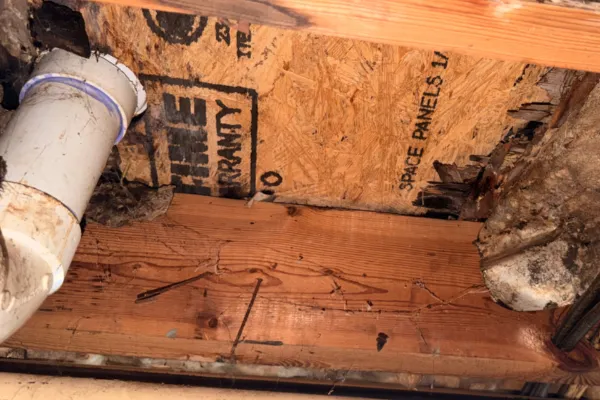
The subfloor underneath is just as important. Soft, spongy, or bouncy spots when you walk can mean the plywood or framing below is weakening. In Knoxville, many of these problems start in the crawlspace, so it's worth checking below the house for standing water, damp or sagging insulation, and condensation on ductwork or pipes.
What Does Sagging Ceiling and Soft Drywall Reveal About Water Damage?
A sagging or bulging ceiling usually means water is pooling above the drywall. Treat this as urgent. Keep people and pets out from under the area, move valuables away, and if water is near light fixtures or outlets and it's safe to do so, shut off power to that area at the breaker. Then call a water damage professional right away.
Drywall acts like a sponge. Once it soaks up water, it loses strength, swells, and can crumble when pressed. Signs to look for include:
Walls that feel soft or give slightly when you press gently
Swelling or crumbling at the bottom of walls
Baseboards pulling away from the wall
Seams or tape lines that bulge or crack
Soft drywall almost always means the material behind it, including insulation and wood framing, has been exposed to moisture too.
What Sensory Indicators Signal Hidden Water Damage?
Some of the most important clues can't be seen at all. Your nose and ears can often detect water damage long before a stain appears.
Why Does Water Damage Produce a Musty Odor?
That familiar damp, earthy smell comes from mold and mildew. As they grow, they release gases known as microbial volatile organic compounds, which produce the musty odor many people associate with basements and old cabinets.
A musty smell is especially telling when it:
Is stronger in one room or near one wall
Gets worse after rain or on humid days
Becomes noticeable when the air conditioning or heat turns on
Comes back shortly after cleaning
Air fresheners can cover the smell, but they don't fix the source. If an odor keeps returning and you can't find a reason for it, hidden moisture is a likely cause.
How to Recognize Unexplained Sounds of Running Water in Walls
Dripping, trickling, or hissing sounds when no faucets, toilets, or appliances are running may point to a leak inside a wall, ceiling, or floor. Hissing often comes from a pressurized supply line, while dripping may come from a drain line or a roof leak during rain.
You can confirm a hidden plumbing leak with a simple water meter test:
Turn off every faucet, appliance, and fixture that uses water.
Write down the reading on your water meter.
Wait one to two hours without using any water.
Check the meter again.
If the reading has changed, water is likely escaping somewhere. An unexplained jump in your water bill is another clue worth following up on.
How Can You Use Modern Tools to Detect Hidden Water Damage?
Water travels along pipes, framing, and subfloors, so the spot where damage shows up isn't always where the leak started. Moisture detection tools help locate wet materials and measure how far the water has spread without unnecessary demolition.
How Does a Moisture Meter Help Measure Hidden Moisture Levels?
A moisture meter measures how much water is present in materials like drywall, wood, and concrete. There are two common styles. Pin meters use small probes pushed into the surface, while pinless meters scan the material through contact with the surface.
Readings are most useful when compared to a dry area of the same material elsewhere in the home. If a wall reads much higher near a stain than it does a few feet away, the moisture is likely still present inside the wall.
Consumer moisture meters are widely available and can help homeowners check suspicious areas. Interpreting the readings correctly takes experience, though, because different materials have different normal ranges. Restoration professionals use moisture readings to map the full extent of the damage and confirm that materials are completely dry before repairs begin.
What Role Does Thermal Imaging Play in Finding Concealed Leaks?
Thermal imaging cameras detect differences in surface temperature. Wet materials often appear cooler than the surrounding area because evaporation pulls heat away from them, which makes hidden moisture show up as a distinct pattern on the screen.
Thermal imaging is valuable because it can scan large areas of walls, ceilings, and floors quickly and without cutting into anything. It does have limits. A thermal camera doesn't see water directly, and cool spots can also be caused by drafts, missing insulation, or air conditioning vents. That's why professionals typically confirm what they see on a thermal image with a moisture meter before drawing conclusions.
What Are the Early Signs of Mold and Mildew Related to Water Damage?
Mold and water damage go hand in hand. The U.S. Environmental Protection Agency (EPA) recommends drying wet or damp materials within 24 to 48 hours to help prevent mold growth. In a humid climate like Knoxville's, wet materials that aren't dried quickly give mold an easy start.
How to Spot Mold Growth Before It Becomes Visible
Mold often grows out of sight, behind drywall, under flooring, or inside crawlspaces and attics. These early signs can help you catch it sooner:
A persistent musty odor with no obvious source
Condensation that regularly forms on windows, pipes, or ductwork
Indoor humidity that stays high; the EPA recommends keeping it below 60 percent, ideally between 30 and 50 percent, and an inexpensive hygrometer can measure it
Small dark specks in grout, caulk, or around air vents
Allergy symptoms, like sneezing or a stuffy nose, that seem worse at home and improve when you leave
If you notice any of these signs along with other signs of water damage in this guide, hidden moisture may be contributing to mold growth. Learn more about mold remediation in Knoxville and when professional help may be needed.
What Materials Are Most Vulnerable to Mold Development?
Mold feeds on organic material, so porous, cellulose based materials are the most vulnerable. These include:
The paper facing on drywall
Wood framing, subfloors, and trim
Ceiling tiles
Carpet and carpet padding
Insulation, especially in crawlspaces and attics
Wallpaper and wallpaper paste
Cardboard boxes and stored paper goods
Upholstered furniture
Nonporous materials like metal, glass, and tile resist mold better, though mold can still grow on the dust and grime that collects on them. The EPA notes that porous materials that have grown moldy may need to be removed and replaced, because mold can be difficult or impossible to clean out of them completely.
What Steps Should Homeowners Take After Detecting Water Damage Signs?
Once you spot a warning sign, acting quickly limits the damage. Start with these basics:
Put safety first. Avoid areas with sagging ceilings, and keep away from standing water near electrical outlets, cords, or appliances.
Stop the source if you can. Shut off the water supply to a leaking fixture or turn off the main water valve.
Document everything. Take photos and videos of the damage and write down when you first noticed it. If you plan to file an insurance claim, this record will help. Check your policy and talk with your insurance provider about what it covers.
Remove what you safely can. Move furniture, rugs, and belongings away from wet areas.
Don't cover up the problem. Painting over stains or replacing flooring before the area is confirmed dry can trap moisture and lead to mold.
When Should You Call a Water Damage Restoration Professional?
A home inspector and a water damage restoration professional serve different purposes. A home inspector is helpful for a general assessment of a property's condition, especially when you're buying or selling a home or want an overall look at possible problem areas.
A water damage restoration professional is the right call when water damage is active or confirmed and needs to be extracted, dried, and repaired. Contact a restorer right away if you notice:
A leak you can't stop or can't locate
Standing water anywhere in the home
A sagging or bulging ceiling
Water near electrical systems
Water from a sewage backup or outdoor flooding, which can carry contaminants
Buckling floors or soft spots in the subfloor
Stains that keep spreading or returning
A musty odor you can't trace
Visible mold covering a large area; the EPA advises that mold covering more than about 10 square feet calls for professional guidance
If you live in Knoxville or the surrounding area and you've noticed any of these signs, Hometown Restoration Group can help you understand what's happening and plan the right next steps for your home.
How to Prioritize Repairs Based on Severity of Water Damage
Not every sign of water damage needs the same response. Sorting problems by urgency helps you protect your home and your budget.
Address immediately:
Active leaks and standing water
Sagging ceilings and other structural concerns
Water near electrical systems
Sewage or floodwater contamination
Address within 24 to 48 hours:
Wet drywall, insulation, carpet, and padding
Damp subfloors and crawlspaces
Any area where mold could begin to grow
Plan and schedule:
Old, dry stains once the source is fixed and confirmed dry
Minor peeling paint and cosmetic repairs
Preventive work like improving ventilation, gutters, or drainage
The most important rule is simple: fix the source and dry the area completely before making cosmetic repairs. Covering damage that is still wet only hides the problem and often makes it more expensive later.
Water damage is easiest to handle when it's caught early. If you've spotted stains, smells, soft spots, or other warning signs in your Knoxville home, learn more about professional water damage restoration in Knoxville and get help determining the next steps for your property.